Oscillation
Group show at Ygrec-ENSAPC Art Centre
A collaboration between ENSAPC and ESAD TALM Le Mans
Ygrec-ENSAPC Art Centre
OPENING HOURS:
Wednesday to Saturday 2pm-7pm
29 rue Henri Barbusse
93300 Aubervilliers

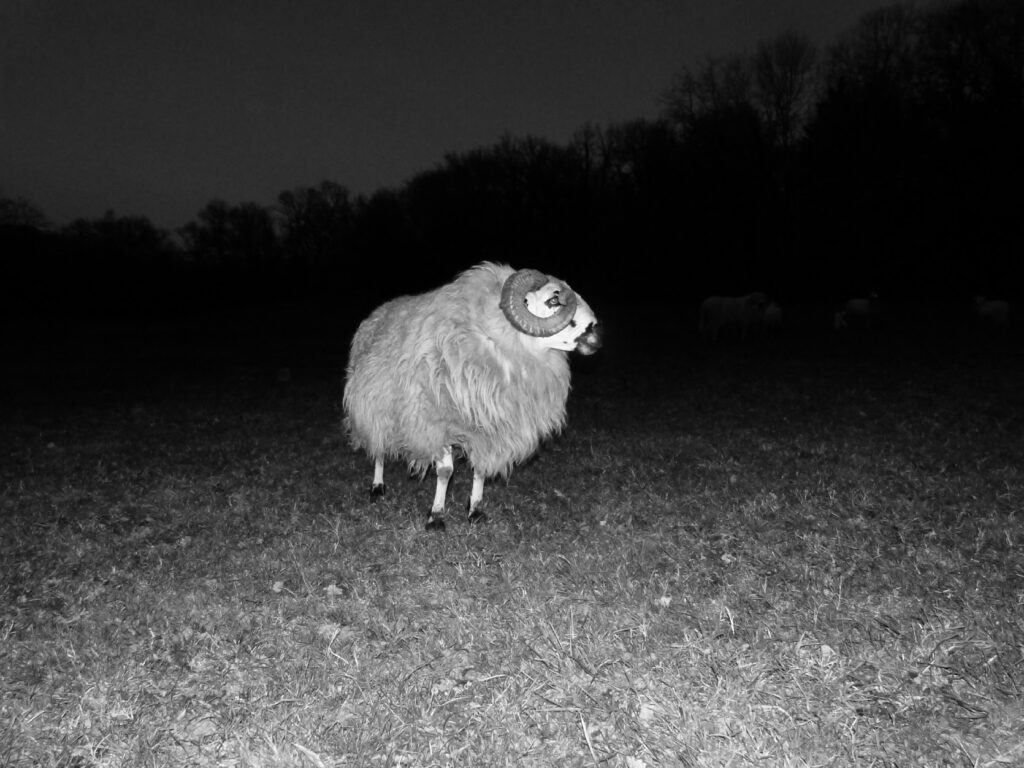
© Nathan Ficagna, Sans Titre, 2025
Oscillation
Ygrec-ENSAPC Art Centre
A collaboration between ENSAPC and ESAD TALM Le Mans
From June 12 to September 19 2026
Opening on June 12 from 5 p.m. to 9 p.m.
Featuring: Fanaja Andriamamonjy, Alexis Boucher, Emma Cambron, Lou Dalifard, Gaylor Duclaux, Nathan Ficagna, Anna Gourdin, Keti Kshutashvili, Sabela Ledet Pineiro, Pierre Lepetit, Cassandre Marie, Assia Mebarki, Mathilde Rato, and Olympia Rezgui.
Curated by: Laura Brunellière (artist and professor at ESAD TALM Le Mans) and Christian Genty (artist and professor at ENSAPC), in collaboration with Guillaume Breton (Artistic Director of the Centre d’art Ygrec).
Oscillation emerges from an exchange program between two art schools and their respective photography departments.
The exhibition brings together fifteen emerging artists invited to place their images and ongoing research in dialogue. An initial closed-session encounter took place at ESAD TALM Le Mans in December 2025. Continuing across distance and beyond the institution’s walls, these exchanges resulted in four constellations of images, four dialogues, and four narratives that collectively sketch a sensitive cartography of the contemporary moment.
In a year marking the bicentenary of photography’s invention, a generation raised alongside generative imagery appropriates and reconfigures what has conventionally been understood as photographic style.
Presented at the Centre d’art Ygrec in Aubervilliers, Oscillation marks the first iteration of the project. The exhibition will then be reimagined and will take over the exhibition gallery at the Le Mans school in October 2026.
“(…) You were born in the late 1990s or early 2000s, and the images of your childhood may be populated less by walks along the shoreline than by Japanese creatures. Yet a cry still runs through your generation. Now, you have the luxury of summoning a memory in a matter of seconds—the time it takes to access a hard drive. It is no longer your memory that reconstructs images, but the other way around. Photography has recorded details you would never have thought of. Beyond family archives, television, Google, and Instagram provide documentation in excess. You can almost remember what came before you were born. These images invade, overfeed, saturate; they pin down a present you never truly experienced. They invent it, without giving you the time to piece the fragments together yourself. But then again, you end up skipping past everything. What stops you in front of this picture is not the realization of forgetting, but the realization that forgetting has become impossible. (…)”
Excerpt from a text by Lou Dalifard accompanying the exhibition.
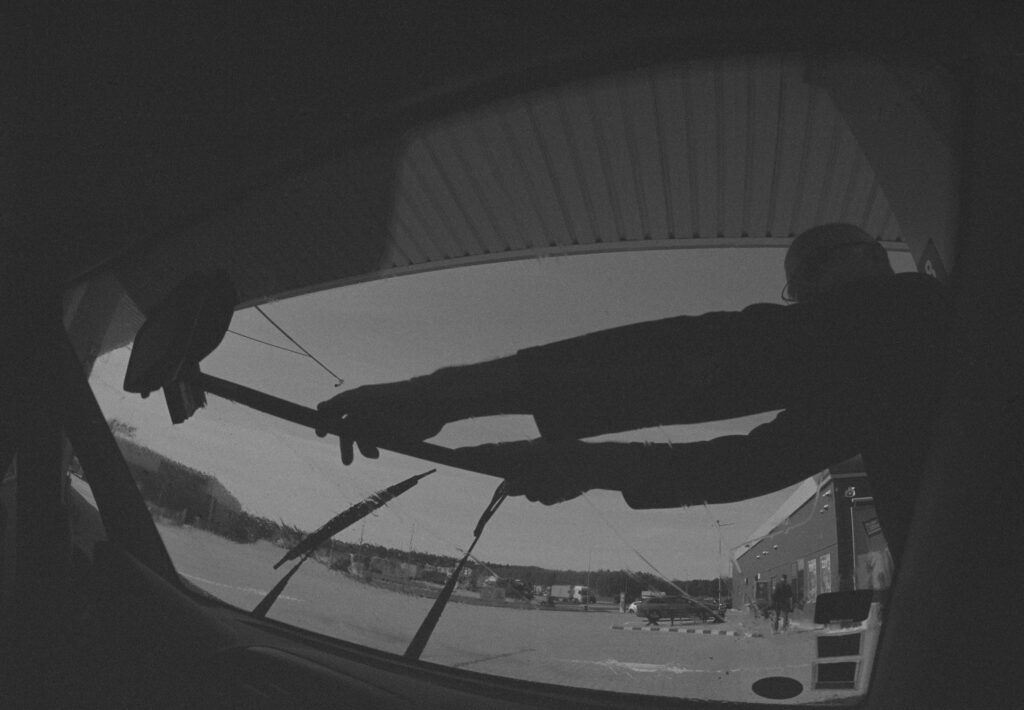
Lou Dalifard, Gmina, 2026.